

Dead Ash Trees Are More Than an Eyesore
If you have a dead ash tree on your property, it may be tempting to ignore it for a while. After all, if the tree is standing and nothing has fallen yet, how urgent can it be?
Unfortunately, dead ash trees are different from many other dead trees. Once an ash tree declines, especially after emerald ash borer damage, the wood can become brittle and unpredictable. That means branches may break without much warning, trunks can become unstable, and the tree can become harder and more dangerous to remove the longer it sits.
For Northeast Ohio homeowners, especially in areas like Medina, Wadsworth, Akron, Canton, Cleveland, and surrounding communities, dead ash tree removal is often a safety issue, not just a landscaping decision.
Why Are So Many Ash Trees Dead in Ohio?
Many dead ash trees in Ohio are connected to emerald ash borer, often called EAB. This invasive insect attacks ash trees by feeding beneath the bark, damaging the tree’s ability to move water and nutrients. Over time, the canopy thins, branches die back, and the tree may eventually die.
Ohio State University has documented the impact of emerald ash borer across the state, noting that it was first detected in Ohio in 2003 and has killed millions of ash trees in forests, neighborhoods, and urban settings.
• Ohio State University Libraries, Trees in Peril
How Do I Know if My Ash Tree Is Dead or Dying?
Some ash trees decline quickly, while others fade over several seasons. If you are wondering if your tree is dead or should be removed, look for these warning signs:
- Large sections of bare branches during the growing season
- Thinning canopy or sparse leaf growth
- Bark splitting or peeling
- D-shaped exit holes in the bark
- Woodpecker damage from birds feeding on insects beneath the bark
- Dead limbs dropping during ordinary weather
- Shoots growing from the base of the tree or trunk
If several of these signs are present, the tree may already be significantly compromised. A professional tree service can inspect the tree and help determine whether removal is the safest option.
Why Dead Ash Trees Become Dangerous
The biggest concern with dead ash trees is brittleness. As the tree dies and dries out, limbs and trunk sections can become less predictable. This can make the tree more likely to shed branches, split, or fail during wind, snow, or heavy rain.
That’s important because many ash trees are large shade trees planted near homes, driveways, garages, fences, and sidewalks. A falling limb from a mature ash can cause serious damage, even if the entire tree doesn’t come down.
Dead ash trees can become especially risky when they are near:
- Houses or garages
- Driveways and parked vehicles
- Play areas or patios
- Sidewalks and roads
- Power lines or service lines
- Neighboring properties
Ohio State’s Buckeye Yard & Garden Line has warned about dead ash trees and wind being a dangerous combination, especially where ash trees are located near people and property.
• Ohio State University BYGL, Watch Your ASH!
Why Waiting Can Make Removal Harder
Waiting to remove a dead ash tree rarely makes the situation better. In fact, it can make removal more complicated. As dead wood becomes brittle, it may be less safe to climb, rig, or cut using ordinary methods. That can mean the job requires more specialized equipment, more planning, or crane-assisted removal.
If your ash tree is already dead, the safest time to deal with it is before it starts dropping major limbs or becomes unstable. A controlled removal is almost always better than an emergency removal after a storm.
What if the Tree Has Already Dropped Limbs?
If your dead ash tree has already started losing large branches, don’t treat that as a one-time problem. Limb drop is often a sign that the tree is continuing to decline. More branches may follow, especially during windy weather or after snow and ice add weight to the canopy.
You should call a tree service promptly if:
- A large ash limb has fallen near your home
- Branches are hanging or cracked overhead
- The tree is leaning or shifting
- Dead limbs are over a driveway, sidewalk, or structure
- Storms have already damaged the tree
If the situation is urgent, emergency tree service may be needed to restore safety and access.
Should the Stump Be Removed Too?
After ash tree removal, many homeowners also choose stump grinding. A leftover stump can be an eyesore, a mowing obstacle, and a trip hazard. Grinding the stump below ground level helps reclaim the space and gives you more flexibility for grass, mulch, landscaping, or future planting.
This is especially useful when the ash tree was in a front yard, near a driveway, or in a high-use part of the property.
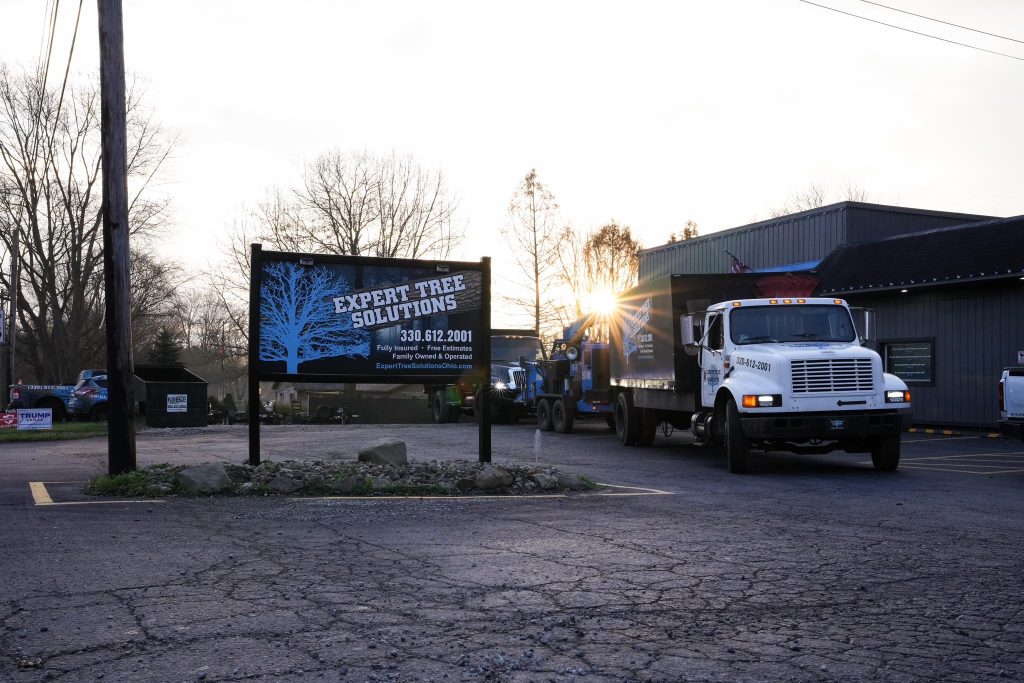
Call Expert Tree Solutions for Dead Ash Tree Removal
Dead ash trees can become dangerous faster than many homeowners expect. If you have a dead or declining ash tree on your property, do not wait until the next storm decides what happens.
Expert Tree Solutions provides safe, efficient dead ash tree removal throughout Northeast Ohio. Our team can assess the tree, explain your options, and handle the removal with the right equipment and a safety-first plan.